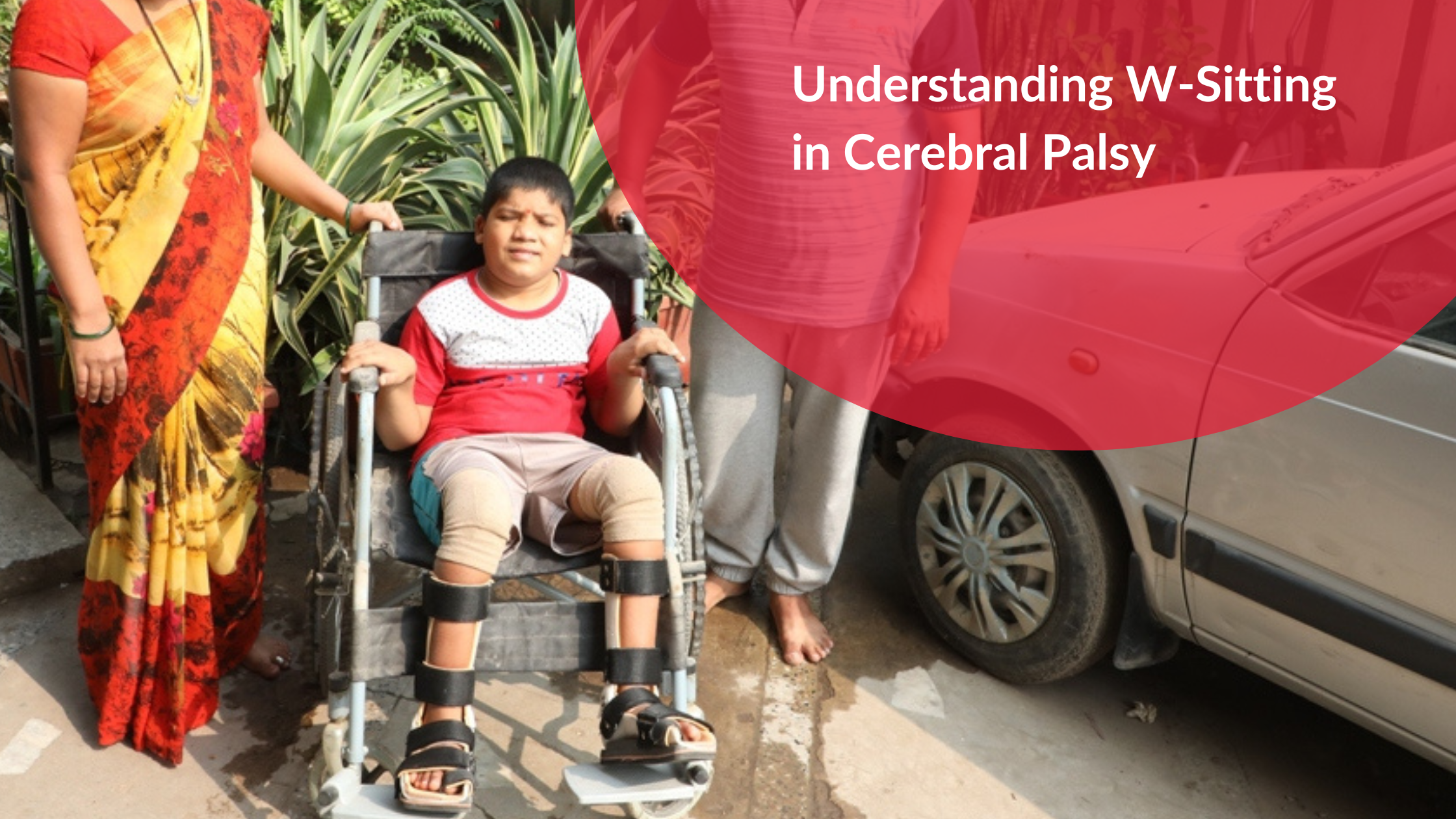
A frequent sitting position known as “W-sitting” involves a child sitting on the floor with their legs turned outward and knees bent in the shape of the letter “W.” Although some kids have a natural preference for this position, people with neurological disorders may find it problematic.
Understanding W-sitting cerebral palsy is crucial because, over time, this position may have an impact on joint health, muscle development, posture, and balance. To promote healthier sitting patterns, parents and other carers should be aware of when W-sitting becomes problematic. This blog examines W-sitting in cerebral palsy.
What is W-Sitting
The term refers to a sitting position or posture resembling the letter W. Crisscross sitting, in which children curl their legs in front of them, is probably familiar to you. When a child sits with their legs out to the sides, knees bent, and hips turned inward, this is known as W-sitting.
They would look like the letter W if you were looking down on them from above.
Why do Children W-Sit?
Children’s bodies will naturally assume positions that work for them. When a child W-sits, it’s their way of gaining extra stability to play and interact. In this position, the legs and hips serve as a stable base of support, so the core muscles of the trunk do not need to work to keep the body upright.
For a child with weak core muscles or low muscle tone – both common features of cerebral palsy – W-sitting can feel like a convenient way to gain stability while playing or focusing on an activity without having to engage their core muscles for balance and posture.
After all, children naturally gravitate toward positions that make it easier for them to participate in the activities they enjoy most – the fun stuff.
When does W-Sitting become a Concern?
From a therapist’s standpoint, there is always a problem. Does that sound a bit harsh? Allow me to clarify.
Giving a child the fundamental abilities they need to realize their full potential is the therapist’s constant goal. W-sitting cerebral palsy disrupts those abilities and puts the child at risk for several issues. It restricts the child’s capacity to move their trunk to side.
This has an impact on a child’s growing neurological and motor systems because it restricts their ability to develop balancing reactions, hip and trunk strength, and two-sided body and brain coordination.
Additionally, if a child chooses to sit in this position every time they are on the floor, their hip and leg muscles may eventually become tight, which may result in abnormal walking and running patterns and back pain. Therapists advise parents to pay special attention when their child starts to crawl based on their experience.
Your child may develop the habit of W-sitting if you observe them attempting to get out of the crawling position by going straight back into W-sitting without rotating. Lastly, because young bones and joints are still developing, any frequent positions may eventually have an impact on joint structure, muscle strength, and flexibility.
A child may walk with their knees or toes pointing inward as a result, or their arches may develop abnormally. As part of effective cerebral palsy management, our objective is to consistently promote achievement and proactively prevent future issues for our children.
Why is W-Sitting Harmful for Cerebral Palsy Children?
Increases Ankle, Knee, and Hip Stress
Proper placement is particularly crucial for children with cerebral palsy because they frequently have muscle imbalances, tight joints, or increase muscle tone. W-sitting puts unnatural strain on the knees and ankles while forcing the hips into excessive internal rotation.
Long-term use of this position may increase the risk of orthopaedic issues, joint soreness, and decreased flexibility. Additionally, it may make it more challenging for kids to acquire the healthful movement patterns necessary for everyday tasks.
Limits the Development of Core Strength and Balance
Children do not need to use their back and abdominal muscles as much to stay upright because W-sitting provides a wide, stable base of support. This decreased muscle activation may slow the development of postural control, balance, and core strength.
During a cerebral palsy diagnosis, healthcare professionals often assess movement patterns, posture, and sitting habits, including W-sitting, to better understand a child’s motor development. Crawling, standing, walking, and carrying out daily duties on one’s own all depend on having strong core muscles.
Encouraging different seating positions encourages healthy motor development and improves muscular engagement.
Diminishes Coordination and Functional Mobility
A child’s capacity to rotate their trunk, transfer their weight, and reach across their body may be hampered by frequent W-sitting. These motions are essential for improving hand function and coordination.
Over time, bad seating patterns may have an impact on learning, play, and physical treatment. Children can progressively adopt better sitting positions that enhance mobility, posture, and general physical function with the help of therapists and carers.
How Can W-Sitting be Corrected in Cerebral Palsy Children?
Encourage Different Sitting Positions: To improve posture and joint alignment, teach kids to sit sideways, cross-legged (criss-cross), or with their legs out in front (long sitting).
Strengthen Core and Hip Muscles: Frequent physical therapy exercises that focus on the trunk, hips, and core increase stability and lessen the need for W-sitting to maintain balance.
Include Daily Stretching: You may increase your flexibility and make healthier sitting positions more pleasant by stretching tight hip, hamstring, and calf muscles.
Give Kind Reminders: Children can become aware of their sitting posture and gradually change the habit with the support of gentle, regular reminders from parents, carers, and educators.
Use Supportive Seating if Needed: Therapists’ suggested positioning aids or adaptive chairs help promote good posture while learning and playing.
Encourage Good Habits: Children who get praise and encouragement are more likely to practise proper sitting positions and eventually adopt healthy movement habits.
Trishla Foundation – Helping Children with Cerebral Palsy Move, Grow, and Thrive
For kids with cerebral palsy, W-sitting may look like a pleasant position, but prolonged use can negatively affect joint health, muscle strength, balance, and posture. Early detection of this behaviour and promotion of healthier sitting postures can enhance functional mobility and promote better physical development.
Children can progressively develop safer movement patterns and stronger core muscles with regular instruction from parents, carers, and physical therapists. Since each child has different needs, tailored evaluation and cerebral palsy treatment are crucial. Families can help children with cerebral palsy develop greater comfort, independence, and confidence in their everyday activities by taking proactive measures to solve W-sitting.